Back Workout Exercises: A Practical Guide for Beginners
This article was written with AI and approved by a person before publishing. Its images are AI-generated.
What Are Back Workout Exercises?
Back exercises train the muscles that pull your shoulders and arms toward your torso. The latissimus dorsi supports shoulder extension and helps create the broad, pulled-down shape associated with a strong back. The rhomboids connect the shoulder blades to the spine, while the trapezius assists with upward shoulder movement and upper-back control. The teres major also helps pull the arm down and in.
A useful back workout combines vertical pulling, such as pull-ups or lat pulldowns, with horizontal pulling, such as rows. Balanced programming gives your upper back different tasks rather than repeating the same movement every session. Your goals can be improved pulling strength, better movement control, resilient posture and general fitness; it does not need to be “bodybuilding” to be worthwhile.
Start with movements you can perform with a clear range of motion. Stop or modify an exercise if you feel sharp pain, numbness or unusual joint discomfort. If you are unsure about a movement or have a history of injury, a qualified trainer can help you assess your starting position.
Best Back Exercises for Beginners
The best beginner exercises are the ones you can control and repeat consistently.
- Bent-over row: A dumbbell row with both hands and a hip-hinged torso. It trains horizontal pulling and is a good foundation for beginners using light weights.
- One-arm dumbbell row: A staggered, supported row that trains each side separately. The supporting hand on a bench or sturdy chair can make it easier to stabilize.
- Reverse row: A body-weight exercise using a sturdy table or bar. It trains the upper back without external weight, making it useful at home or outdoors.
- Pull-up: A challenging vertical pull. Beginners can begin with assisted pull-ups, a resistance band or lat pulldowns.
Common mistakes include rounding the lower back heavily, jerking the weight upward and pulling with the arms only. Keep your ribs mostly stacked over your pelvis, brace gently and let the shoulder blades move naturally.
Browse back exercises in Fitnaut to review exercise demonstrations and options before building a session.
Dumbbell and Bodyweight Back Exercises
Bent-over row
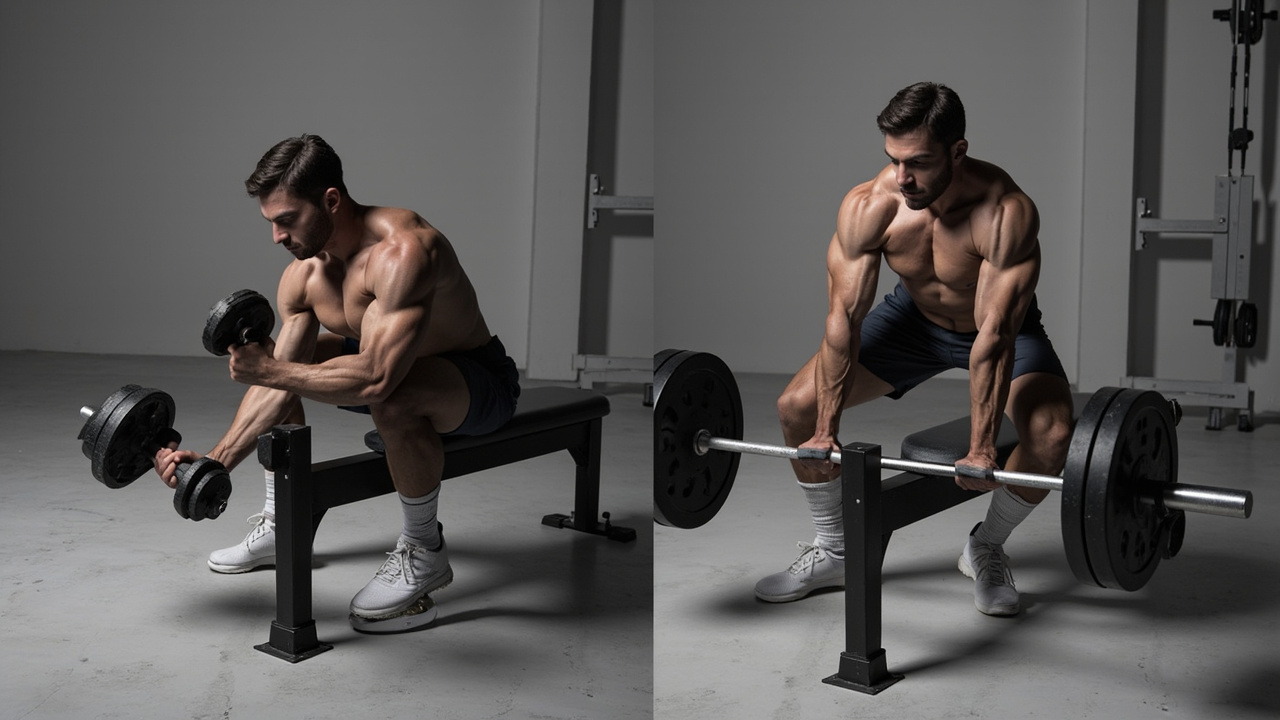
For a bent-over row, hold one dumbbell in each hand, hinge at the hips with soft knees and a neutral spine, and let your arms hang below your shoulders. Pull the dumbbells toward your lower ribs while keeping your shoulders down, then lower them under control.
A more beginner-friendly option is the one-arm dumbbell row. Place one hand and the same-side knee on a bench, with the other foot on the floor. Keep your torso firm and row the free weight toward your hip.
Reverse row
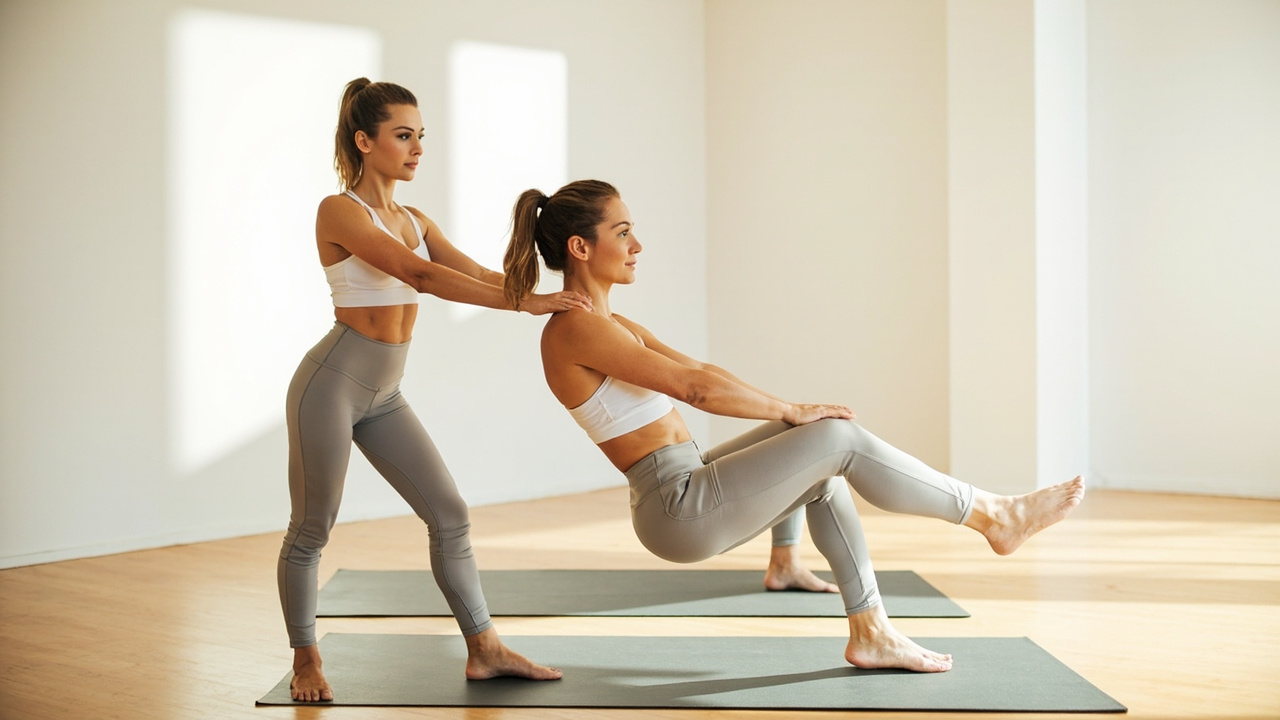
Sit on the floor in front of a stable, high-supported surface, place your heels on it and hold the edge with your hands. Lean back with a straight body, pull your chest toward the support and lower yourself slowly. Keep your hips from dropping or arching excessively.
Use a resistance band around your feet for an easier version, or move closer to the support for greater difficulty. Check that the equipment can bear your weight before beginning.
Pull-up
For a pull-up, grip the bar with hands slightly wider than shoulder width, hang with straight arms and pull your chest toward the bar. Avoid swinging or kicking. If you cannot perform a full pull-up, try assisted pull-ups, a band-assisted variation or the lat pulldown.
Find guided workouts in Fitnaut if you prefer a ready-made session rather than assembling every exercise yourself.
How to Perform Each Exercise
Use these principles for every pulling movement:
AI-generated image
- Set your position. Maintain comfortable alignment through your spine and neck; avoid forcing a rounded upper back.
- Create light tension. Gently brace your abdomen before the pull. You should look firm, not rigid.
- Pull with the arms and upper back. Think about driving your elbows toward your ribs for rows and downward for vertical pulling.
- Exhale during the effort. Inhale as you return to the starting position unless you need the opposite breathing pattern for comfort or a specific training goal.
- Control the return. Lower slowly without relaxing into an awkward position.
For rows, stop when your upper arms are approximately parallel to your torso, provided your form remains good. For pull-ups and pulldowns, pull until the movement becomes difficult without shrugging or swinging. Use a shorter range of motion if that is the only position you can control.
When a repetition feels challenging, try gripping the weight more firmly, keeping your ribs stacked and thinking “elbows to ribs.” These cues can help reduce momentum, but they should not make you brace so hard that your breathing stops.
Choosing the Right Back Workout
Choose exercises according to your available equipment and experience.
- No equipment: Reverse rows, prone Y-raises, towel or table rows, and band pull-aparts can provide accessible pulling work.
- Dumbbells only: Bent-over rows, one-arm rows and supported dumbbell rows cover the main patterns.
- Full gym: Rows can be combined with pull-ups, lat pulldowns and face pulls for varied vertical and horizontal pulling.
Consider mobility, current fatigue and movement quality. A stiff torso may make an unsupported bent-over row difficult; a chest-supported row can be a better alternative. If an exercise repeatedly causes pain or breaks your positioning, choose a more comfortable variation or seek guidance.
Build a training program with Fitnaut to organize sessions around the equipment, schedule and exercises that suit you.
Beginner Back Workout Routine
Perform this routine on two nonconsecutive days each week, such as Monday and Thursday. Begin with one or two sets of each exercise and use approximately 8–12 controlled repetitions. Rest about 60–90 seconds between sets, or longer if needed to maintain good technique.
Session A
- Supported one-arm dumbbell row: 2 sets of 8–10 repetitions per side
- Reverse row: 2 sets of 8–12 repetitions
- Lat pulldown or assisted pull-up: 2 sets of 8–12 repetitions
- Dumbbell face pull: 2 sets of 10–12 repetitions
Session B
- Chest-supported dumbbell row or bent-over row: 2 sets of 8–12 repetitions
- Band or bodyweight pull-up work: 2 sets of 6–10 controlled repetitions
- One-arm dumbbell row: 2 sets of 8–10 repetitions per side
- Prone Y-raise: 2 sets of 8–12 repetitions
Use this schedule as a starting point, not a requirement to work to failure. Leave a small amount of good repetition in reserve while you are learning. You can also include core stability work such as dead bugs or side planks after the pulling exercises.
Intermediate Back Workout Progression
Once you can perform all repetitions with steady technique and controlled range of motion, progress gradually. Increase resistance before adding volume. For example, if two dumbbell rows are comfortable at the same load, move to a heavier pair rather than immediately adding several sets.

AI-generated image
After resistance becomes easier, you can add another set, lengthen the pause at the top of a row or use a slower lowering phase. Additional pulling variations can also help develop the upper back: chest-supported rows, wide-grip pulldowns and controlled pull-ups.
Alternate vertical and horizontal pulling across the week rather than performing every exercise in one long session. Keep occasional lighter technique sessions, especially if your main work involves running, hiking or climbing.
Get help from a Fitnaut trainer if you need help with exercise selection, progression or programming.
Back Workouts for Runners and Hikers
Back training can support runners and hikers by strengthening the muscles that hold your shoulders and upper torso steady, while core stability helps control your trunk during movement. It does not replace conditioning for running or hiking, but it can complement your cardio preparation.
Prioritize rows, pull-ups or pulldowns, and controlled reverse rows. Keep each session focused and avoid exhausting your pulling muscles before a long trail or run.
A practical approach is to train your back on a day separated from your hardest cardio session. On mixed days, use lighter pulling movements and keep the total session manageable. Explore cardio and trail workouts to coordinate back training with your outdoor routine.
How to Track Progress
Track the exercise, resistance, repetitions, sets and how the movement felt. Notes such as “10 repetitions, controlled, no discomfort” are more useful than a single number. Photographing a difficult setup may also help you compare position over time.
Progress in this order:
- Improve or maintain range of motion and technique.
- Add a small amount of resistance while repetitions remain controlled.
- Increase repetitions within a comfortable range.
- Add a set only when recovery and technique support it.
Consistency and clean repetitions are stronger indicators than chasing a heavy number immediately. A session still counts when you use an easier variation because you completed every planned repetition with control.
Join the Fitnaut fitness community to stay connected with your training and progress.
Frequently asked questions
What are the best back workout exercises for beginners?
Rows, reverse rows and lat pulldowns are accessible options because they are easier to control than full pull-ups. Choose movements that match your equipment and allow a comfortable range of motion.
Which back exercises work without weights?
Reverse rows, bodyweight pull-ups, table or towel rows, and resistance-band pull-aparts can provide back training without dumbbells.
What dumbbell exercises are best for the back?
Bent-over rows, one-arm dumbbell rows and chest-supported rows are useful options. Chest support can make a row easier to brace correctly.
How many sets and reps should I do for back workouts?
Start with two sets of about 8–12 controlled repetitions per exercise on two nonconsecutive days. Progress resistance or volume only while technique and recovery remain good.
How often should I train my back?
Two weekly sessions are a practical starting point for many beginners because they allow time for recovery between training days.
How do I progress back exercises safely?
Increase resistance slightly before adding repetitions or sets. Reduce the load, shorten the range of motion or change the variation if your form deteriorates or discomfort develops.